Subscribe to receive updates

Sign up to receive updates, study tips, and special offers from Pass Perfect.

Learners

Live Class ScheduleFAQsStudent Login

Corporate

Corporate PartnershipsUniversity PartnershipsTesting Methods

Company

Contact UsOur Pass PromiseOur Difference

Advanced Designations

Bionic TurtleMark Meldrum

Financial Planning

Dalton EducationMoney Education

Licensing

Pass Perfect

Financial Crimes

ACFCS

Tax & Accounting

Checkpoint LearningSpidellFast Forward Academy

Legal

LegalEdge
Terms and Conditions
Privacy Policy

© 2026 Pass Perfect, LLC. All Rights Reserved

3625 Brookside Pkwy., Suite 450, Alpharetta, GA, 30022

Learning programs powered by the best brands in the industry.

Learn More
×

NASAA deadline to submit IAR CE for 2025 is Monday, December 22 at 11:59pm ET for CE to be processed prior to CRD system shutdown on Friday, December 26.

Pass Perfect will submit all CE through December 22 until 5pm ET.

CE courses taken after December 22 will not be processed until 2026.

Course Packages

Investment Advisor Representative (CE)

View Courses

12 hours

annually

6 hours

in Products and Practices

6 hours

in Ethics and Professional Responsibility

(including the required 3 hours of ethics).

No hours carry over to the next period

Courses can never be repeated

Due 12/31

every year

Product Specific Training

Products and Practices

  • 6 hours every year

Ethics and Professional Responsibility

  • 6 hours every year
  • will qualify for 3 hours of ethics

Exemptions

IARs who complete FINRA regulatory element CE are exempt from the Products and Practices (6 hours) requirement

Regulator

NASAA

IARCE@nasaa.org www.nasaa.org

Pass Perfect is an approved IAR CE provider.

NASAA does not endorse any particular provider of CE courses. The content of the course and any views expressed are our own and do not necessarily reflect the views of NASAA or any of its member jurisdictions.

Requirements

Complete your CE with Pass Perfect

Course Ordering

  • Order individual CE courses or libraries

  • Receive email with LMS login instructions

Course Access

  • Read the Welcome page instructions

  • Study all material before exams

Certification

  • Pass certification exam (70%+ score)

  • Three attempts allowed

  • Download the completion certificate for your records

Reporting

  • Pass Perfect reports to FINRA within 1 business day

  • Check the roster date on your course dashboard
IAR CE Courses

Filters

Insurance Type

Course Packages

CFP Credit Available

  • Bundle
    12 Credit Hour

    Credit:

    Ethics and Professional Responsibility

    All Access Library

    $

    62.95

    1

    • Common Types of Investment Fraud
    • DeFi and Digital Assets
    • Insider Trading: Ethical Behavior 102
    • Life Insurance and Annuity Products
    • An Introduction to ESG Investing
    • The Ethical Use of Choice Architecture
    • Investing in Private Placements
    • Sexual Harassment: Creating a Safe Work Environment
    • Self-Directed IRAs: A Risky Alternative
    • Business Continuity Planning
    • Options 101
    • Preventing Adult Financial Exploitation
    • Recommending Complex Products
  • Bundle
    12 Credit Hour

    Credit:

    Ethics and Professional Responsibility

    Ethics and Professional Responsibility Library

    $

    41.95

    1

    This library includes 12-month access to all courses approved in the Ethics and Professional Responsibility category. You can take as many courses as you like. We will file credits with FINRA until your requirements are complete. Courses taken after that point will not be submitted for credit.

  • 1.5 Credit Hour

    Credit:

    Ethics and Professional Responsibility

    Advisers’ Guide to Ethical Social Media

    $

    13.95

    1

    This course comprehensively examines social media ethics and compliance for state-registered investment adviser representatives. The course begins by exploring the transformation of client communication in the digital age and the strategic value of social media in modern advisory practices. Following the introduction, the course examines the regulatory framework governing social media use, including the Marketing Rule’s application to state-registered advisers and the pivotal Netflix case study illustrating Regulation Fair Disclosure requirements. The course then delves into compliance obligations, covering recordkeeping requirements, Write Once, Read Many (WORM) protocols, and the management of third-party content. Practical implementation strategies include platform selection, content development, and risk management procedures. The course examines data privacy and security requirements, particularly Regulation S-P. Special attention is given to the emerging role of financial influencers (”finfluencers”) and the regulatory challenges they present. Detailed case studies demonstrate successful implementation strategies and enforcement actions.

  • 2 Credit Hour

    Credit:

    Ethics and Professional Responsibility

    AI Washing: Advisory Risks and Solutions

    $

    13.95

    1

    This course examines AI-washing risks and compliance strategies for state-registered IARs. It defines AI-washing and distinguishes legitimate AI from misrepresentations, tracing how technology and marketing claims have evolved in financial services. The regulatory section analyzes how existing securities laws apply to AI-washing through antifraud provisions, fiduciary duties, marketing rules, and recordkeeping requirements. The course explores high-risk areas, including marketing materials, Form ADV disclosures, client communications, and investment due diligence, with practical guidance on documentation standards and review processes. Real-world enforcement cases illustrate regulatory approaches and consequences. A strategic framework addresses dual challenges: preventing misrepresentation in firm communications while conducting appropriate due diligence on AI claims in investment opportunities. Finally, the course concludes with an “AI terminology guide” that defines the most common terms and clearly explains the technology’s current capabilities and limitations.

  • 1 Credit Hour

    Credit:

    Products and Practices

    1 CFP Credit Hour
    An Introduction to ESG Investing

    $

    13.95

    1

    This course is about the new world of environment, social, and governance (ESG) investing. The course begins with a short history of the ESG movement, including the roles international and domestic governing bodies have played in jump-starting ESG investing. The different types of ESG ratings are compared and explained. Additionally, the course describes the types of ESG securities available and ways to choose an ESG portfolio that aligns with an investor’s values. Finally, the course lays out the potential risks and benefits of ESG funds and common ESG investment philosophies, such as impact investing and sustainable investing.

  • 1.5 Credit Hour

    Credit:

    Ethics and Professional Responsibility

    BI and Fiduciary Standards for IARs (New for 2026)

    $

    13.95

    1

    Regulation Best Interest (Reg BI) fundamentally reshaped the standards of conduct for broker-dealers, requiring them to act in retail customers’ best interests rather than merely meet suitability requirements. For investment adviser representatives, understanding Reg BI is essential: it shapes client expectations, provides context for state regulatory examinations, and creates compliance challenges for dually registered professionals. This course examines Reg BI’s four component obligations—disclosure, care, conflict of interest, and compliance—while exploring how these standards compare to the fiduciary duty that governs investment advisers. Participants will learn how state securities regulators apply Reg BI concepts when evaluating IAR conduct, why NASAA adopted 2025 Model Rule amendments incorporating best interest standards, and how dual registration creates unique examination risks. The course covers Form CRS requirements, regulatory convergence between broker-dealer and adviser standards, current enforcement trends, and practical strategies for IARs navigating today’s regulatory environment.

  • 1 Credit Hour

    Credit:

    Ethics and Professional Responsibility

    Business Continuity Planning

    $

    13.95

    1

    This course is about business continuity planning. Additionally, this course investigates the origins of business continuity planning and the historical events that helped shape business continuity planning.  It then uses these events as a lens to better understand the importance of having a business continuity plan (BCP) and the regulation relevant to BCPs. Additionally, this course covers regulatory guidance relevant to creating a business continuity plan (BCP). Finally, the course describes the process of succession planning and why it is important to business continuity planning. 

  • 1 Credit Hour

    Credit:

    Ethics and Professional Responsibility

    1 CFP Credit Hour
    Common Types of Investment Fraud

    $

    13.95

    1

    This course covers the characteristics, methodologies and red flags of the most common forms of financial fraud an investment advisor representative and their clients may be exposed to while evaluating securities and investment opportunities. A brief history of anti-fraud policies and simple forms of fraud are described to encourage healthy skepticism as well as respect for the protective efforts of the SEC. By highlighting modern internet-based scams and red flags common to many forms of fraud, participants will have the tools necessary to identify and protect themselves and their clients from unscrupulous actors.

  • 1.5 Credit Hour

    Credit:

    Ethics and Professional Responsibility

    Complex Products IAR Duties and Ethics

    $

    13.95

    1

    This course examines complex financial products and the heightened ethical and regulatory obligations IARs face when clients encounter them. The course defines complex products using NASAA’s framework of products that are complex, costly, and risky, then explores specific product types, including structured products (principal-protected notes, market-linked CDs, leveraged steepeners, reverse convertible notes), non-traditional ETFs (leveraged and inverse ETFs, cryptocurrency ETFs), and illiquid products (public non-listed REITs, variable annuities, registered index-linked annuities, and private placements).

    The course emphasizes practical application through detailed enforcement actions and real-world scenarios, illustrating how regulatory failures occur and how IARs should fulfill their fiduciary duties. Participants learn the specific responsibilities of brokers under Regulation Best Interest and IARs under fiduciary standards, with particular focus on understanding products, considering simpler alternatives, managing conflicts of interest, and maintaining ongoing portfolio oversight.

  • 0.5 Credit Hour

    Credit:

    Ethics and Professional Responsibility

    Compliance Issues for Dual Registrants

    $

    13.95

    1

    This course provides an overview of regulatory and ethical issues relevant to dual registrants, including individuals registered as both an IAR and a BD agent, as well as firms registered as both an IA and a BD. Participants will learn how to identify which standard of conduct applies in various client interactions and the differences between the fiduciary standard for IAs and the Reg BI standard for BDs. Issues around registration and conflicts of interest are covered, as are overlapping IA and BD disclosure requirements. The course compares and contrasts the Marketing Rule with regulatory requirements for BD communications with the public. Participants will learn about the need for compliance practices that comply with both the SEC’s Compliance Program Rule and FINRA’s Supervision Rule. Participants are encouraged to consider the practical challenges of clarifying for customers which capacity an IAR/BD agent is acting in during a given client interaction. Trends in regulatory examinations and sanctions are discussed.

  • 1 Credit Hour

    Credit:

    Ethics and Professional Responsibility

    0.5 CFP Credit Hour
    Complying with the SEC Pay-to-Play Rule

    $

    13.95

    1

    This course is about the SEC’s Pay-to-Play Rule which puts restrictions on political contributions by Investment Advisers. In this course, participants learn which political contributions are permissible and which are prohibited under the Rule. The course covers the basic obligations and record-keeping responsibilities of investment adviser representatives to stay within compliance. Participants learn the definition of a political contribution, who is covered under the Rule, and the manner and degree to which political contributions are permissible. Participants learn about the consequences of making a prohibited contribution and read about past SEC penalties on firms that did not comply with the Rule. An overview of compliance methods in addition to penalties and enforcement measures are examined to encourage awareness and proactive vigilance among investment adviser representatives.

  • 0.5 Credit Hour

    Credit:

    Ethics and Professional Responsibility

    Continuing Education Requirements for IARs

    $

    13.95

    1

    Completing continuing education is both a professional responsibility and an ethical imperative for investment adviser representatives. This course helps IARs understand why continuing education requirements exist, why it is an ethical obligation to remain up to date on industry knowledge, and how the continuing education system outlined in the Model Rule on Continuing Education for Investment Adviser Representatives provides a framework for fulfilling this obligation. This course also covers expectations for IAs and IARs regarding compliance and recordkeeping, state variations in continuing education requirements, and how constructive engagement with continuing education benefits clients.

  • 2 Credit Hour

    Credit:

    Ethics and Professional Responsibility

    Crypto Custody and Fiduciary Duty

    $

    13.95

    1

    Crypto Custody and Fiduciary Duty examines how the safekeeping of digital assets challenges traditional investment-adviser standards of care. This course explores the evolving regulatory framework surrounding custody of cryptocurrencies and other digital assets under SEC Rule 206(4)-2, pending Safeguarding Rule proposals, and state interpretations. Participants learn to distinguish between qualified and non-qualified custodians, evaluate due diligence and disclosure requirements, and identify operational and cybersecurity risks unique to blockchain-based custody. Through real-world case studies—including the FTX collapse and SDIRA parallels—advisers gain practical tools for assessing custodian integrity, structuring compliant disclosures, and managing emerging risks such as quantum computing and DeFi exposure. Designed for state-registered IARs, the course emphasizes translating complex custody arrangements into plain-language client communication. Advisers complete the program equipped to uphold fiduciary, ethical, and regulatory duties while navigating a rapidly changing digital-asset landscape.

  • 1 Credit Hour

    Credit:

    Products and Practices

    1 CFP Credit Hour
    Cryptocurrency

    $

    13.95

    1

    This course is about digital assets, specifically cryptocurrency. The course explains what cryptocurrency is and how it is created. This includes information about the underlying blockchain technology. Additionally, this course contains information about how cryptocurrency is exchanged and the benefits and drawbacks of cryptocurrency. This includes discussions of the technological benefits, the risks of volatility, the lack of regulation of markets, possible scams, and the environmental costs of cryptocurrency mining. Finally, this course describes some current and upcoming regulations in cryptocurrency, including the classification of digital assets as securities and initial coin offerings.

  • 1.5 Credit Hour

    Credit:

    Ethics and Professional Responsibility

    Cybersecurity and Compliance

    $

    13.95

    1

    This course provides a broad overview of cybersecurity for registered investment advisers. In doing so, it covers cybersecurity regulations applicable to both federally covered investment advisers and state-registered investment advisers. Additionally, it explains cybersecurity guidance from NASAA and the SEC. In doing so, it provides a general overview of how to formulate a cybersecurity framework for an adviser, as well as the role of the individual investment adviser representative in this process.

  • 1 Credit Hour

    Credit:

    Ethics and Professional Responsibility

    0.5 CFP Credit Hour
    Cybersecurity: Protecting Your Clients’ Data

    $

    13.95

    1

    This course seeks to provide a broad overview of how cybersecurity pertains to registered investment advisers. In doing so, it covers regulation that addresses cybersecurity for both federally covered investment advisers, as well as state registered investment advisers. Additionally, it explains cybersecurity guidance from the NASAA as well as the SEC. In doing so, it provides a general view of how to formulate a cybersecurity framework for an adviser, as well as the role of the individual investment adviser representative in doing so.

  • 1.5 Credit Hour

    Credit:

    Products and Practices

    Debt Securities

    $

    13.95

    1

    This course examines topics that investment adviser representatives should know regarding debt securities issued by corporations, municipalities, GSEs, and the U.S. Treasury. Concepts and terminology are presented for a broad range of debt-related topics, with examples where appropriate. The course covers bond types available to investors, maturity structures, different ways to characterize a bond’s yield, the relationship between interest rates and bond prices in the secondary market, accrued interest, and the money market. Sections delve into specific categories of debt securities, such as T-bills, STRIPS, TIPS, asset-backed securities, collateralized mortgage obligations, and municipal bonds.

  • 1 Credit Hour

    Credit:

    Ethics and Professional Responsibility

    1 CFP Credit Hour
    DeFi and Digital Assets

    $

    13.95

    1

    This course offers a look into the world of digital assets through the lens of fiduciary duty. Examples discussed include cryptocurrency, dApps, DeFi Projects, Non-Fungible Tokens (NFTs), and more. This course provides information on the function of these digital assets and asset tools, as well as an analysis of the benefits and drawbacks to an IAR and their clients. This includes a discussion of whether IARs have the tools to provide a sufficient suitability analysis on these digital assets for their clients. The course culminates in an assessment of the SEC’s regulatory framework for these assets, and their identification of pitfalls and challenges that may affect IARs who add digital assets to their clients’ portfolios.

  • 1 Credit Hour

    Credit:

    Ethics and Professional Responsibility

    Developing a System of Professional Ethics

    $

    13.95

    1

    This course examines how to develop a system of professional ethics. The course begins by discussing how being a “professional” can bring greater respect and compensation, but with this designation also comes a higher standard of conduct. The course covers the core principles of professional ethics, including honesty, fairness, and competence, as it applies to an IAR’s job. Honesty must be used in communications about the IAR’s credentials and business. Fairness is shown to be important in matters of disclosure, fees, confidentiality, and loyalty. Competence must underly a professional’s credentials. The importance of using ethical principles when creating brochures, direct mailings, and business cards is also discussed. The course also goes over strategies for how prospects can be ethically converted into clients. Finally, the course concludes with a discussion of the SEC’s Form CRS (Customer/Client Relationship Summary) and the “conversation starters” that the SEC requires financial professionals to use to prompt pragmatic discussions between advisers and clients.

  • 1 Credit Hour

    Credit:

    Products and Practices

    Diversification

    $

    13.95

    1

    This course provides an overview of diversification as an aspect of investment strategy. The purpose and benefits of diversification are outlined, as are specific types, such as diversification across asset classes or sectors of the economy. The role of correlation in effective diversification is covered, including how diversification’s usefulness changes at different levels of correlation. The course discusses the limitations of diversification, including overdiversification and the inability of diversification to eliminate systematic risk. Common diversification myths are identified and challenged. The course covers practical considerations such as strategic vs. tactical asset allocation, the core-satellite method, and rebalancing.

  • 0.5 Credit Hour

    Credit:

    Products and Practices

    Equity Securities

    $

    13.95

    1

    This course examines topics that investment adviser representatives should know regarding equity securities. Concepts and terminology are presented for a broad range of equity-related topics, with examples where appropriate. The course covers types of equity securities available to investors, including common shares, preferred shares, warrants, rights, and ADRs. Significant features of various equity securities are covered, including capital gains, voting rights, transfer rights, dividends, share buybacks, their effects on EPS, preferred call provisions, and the intrinsic vs. time value of warrants.

  • 1 Credit Hour

    Credit:

    Ethics and Professional Responsibility

    ESG Investing

    $

    13.95

    1

    This course provides an overview of a values-based approach to investing known as ESG (environment, social, and governance) investing. The ethical dimensions of ESG investing and working with clients interested in ESG are explored. The history and development of ESG, as well as what constitutes an ESG investment, are covered. Participants will learn about the role of ESG rating agencies and types of ESG investments. The course discusses the risks and benefits of ESG investing, as well as ESG investment strategies. The ethical foundations of ESG investing are analyzed, and implications for fulfilling fiduciary duties are discussed.

  • 1 Credit Hour

    Credit:

    Products and Practices

    Estate Planning

    $

    13.95

    1

    This course provides a general overview of estate planning and related matters. The course begins by broadly defining essential concepts such as wills, trusts, probate, estate accounts, and transfer on death provisions. The course outlines additional concepts, such as, the basics of estate tax, the lifetime gift tax exclusion, the annual gift tax exclusion, and the marital deduction. The course provides a sizable discussion of trusts, including the differences between irrevocable and revocable trusts, and grantor and non-grantor-trusts. The course continues by describing types of trusts such as generation skipping trusts, QTIP trusts, spendthrift trusts, special needs trusts, and pet trusts. The course compares the advantages and disadvantages of private foundations and donor-advised funds. The course explains how life insurance, securities, annuities, and 401(k)s are treated after death. The course concludes by listing basic estate planning tips.

  • 1 Credit Hour

    Credit:

    Ethics and Professional Responsibility

    Ethics of Sales

    $

    13.95

    1

    This course provides a foundational framework for understanding how ethical decision-making occurs in a business context. The course covers how ethical standards are established, as well as the importance of observing them. The investment adviser representative is encouraged to evaluate how the norms within a workplace can have a positive or negative impact on the ethical behavior of individuals. Theories of ethics are discussed, including the history, advantages, and limitations of each, with examples to illustrate the implications of different approaches to ethics. Through discussion and examples, the representative is encouraged to take a balanced and thoughtful approach to understanding ethical decision-making. The course distinguishes between actions that are obligatory, permissible, and impermissible. The course discusses the investment adviser representative’s obligation to take the client’s values into account when making investment recommendations. Examples of ethical decision-making are presented that require the IAR to either determine the best course of action or understand the thought process behind a particular ethical decision.

    By the end of the course:

    • Participants should be able to distinguish between laws, rules, and norms, as well as understand the different roles played by each in creating and enforcing ethical frameworks.
    • Participants should be able to demonstrate comprehension of how ethical rules and standards of conduct come about, as well as their importance.
    • Participants should be able to identify the strengths and limitations of an ethical approach that emphasizes the consequences of one’s actions.
    • Participants should be able to identify the strengths and limitations of an ethical approach that treats actions as always right or wrong, regardless of the situation.
    • Participants should be able to identify the strengths and limitations of an ethical approach that emphasizes social norms.
    • Participants should be able to understand the value of a balanced approach that looks at ethical decision making from each of the perspectives discussed.
    • Participants should be able to distinguish between obligatory actions, permissible actions, and impermissible actions.
    • Participants should be able to recognize their obligation to take the client’s values into account when making investment recommendations.
  • 0.5 Credit Hour

    Credit:

    Ethics and Professional Responsibility

    Fiduciary Duty in U.S. Law and Finance

    $

    13.95

    1

    This course provides investment adviser representatives with a fuller understanding of a key component of their obligations to clients, the concept of a fiduciary duty. The course begins with a legal-historical examination of the development of fiduciary duties, such as the obligation not to engage in self-dealing and the corporate opportunity doctrine. The course covers the distinction between the duty of loyalty and the duty of care. Fiduciary duties in specific contexts, such as discretionary accounts, trust accounts, retirement plans, and mutual fund management, are also covered. The course discusses the difference between the fiduciary standard for investment advisers and the Regulation Best Interest standard for broker-dealers, as well as the implications of multiple standards for dually registered firms. Emerging regulatory trends and landmark cases related to fiduciary duties are discussed.

  • 1 Credit Hour

    Credit:

    Ethics and Professional Responsibility

    Financial Abuse of Senior and Disabled Clients

    $

    13.95

    1

    This course provides investment adviser representatives with a detailed understanding of how to identify, prevent, and respond to the financial exploitation of senior and disabled clients. It explains the scope and impact of elder financial abuse, outlines red flags for diminished capacity and exploitation, and explores modern threats such as AI-enabled scams and cryptocurrency fraud. Learners will review key federal and state protections, including NASAA’s Model Act to Protect Vulnerable Adults from Financial Exploitation, the Senior Safe Act, and recent interagency guidance. The course also presents best practices for reporting, placing transaction holds, engaging trusted contacts, and coordinating with Adult Protective Services and regulators to safeguard vulnerable clients.

  • 1 Credit Hour

    Credit:

    Products and Practices

    Financial Statements

    $

    13.95

    1

    This course provides an overview of financial statements, how to access them, and their significance to IARs. Concepts and terminology are presented to help IARs understand the three main types of financial statements—balance sheets, income statements, and cash flow statements—and how they interrelate. The course covers methods for accessing a company’s financial statements, including using EDGAR to search for SEC filings. Coverage of the balance sheet includes a discussion of different classes of assets and liabilities, the need for the equation assets – liabilities = owners’ equity to balance, and the role of retained earnings in tracking a company’s performance over time. Coverage of the income statement includes the distinction between revenues, gross income, operating income, and net income, as well as the categorization of various expenses, such as COGS, depreciation, PP&E, and taxes. Coverage of the cash flow statement includes the distinction between cash-basis accounting and accrual-basis accounting, how cash flows are categorized, and the distinction between sources of cash and uses of cash.

  • 1.5 Credit Hour

    Credit:

    Products and Practices

    Hedge Funds

    $

    13.95

    1

    This course examines topics that investment adviser representatives should know before recommending hedge funds. Concepts and terminology are presented for a broad range of hedge fund–related topics. The course covers the development and original philosophy of hedge funds, as well as how they have evolved beyond their original purpose of hedging. Who can invest in hedge funds is covered, as well as the fact that hedge funds are unsuitable for many investors, especially small retail investors. The course delves into many of the strategies employed by modern hedge funds. The course discusses risks associated with hedge funds, the role of diversification, funds of hedge funds, and liquid alts.

  • 1 Credit Hour

    Credit:

    Products and Practices

    Hedging

    $

    13.95

    1

    This CE course equips investment adviser representatives (IARs) with a practical, fiduciary-first framework for using hedging as a client-centered risk management tool. Moving beyond options mechanics alone, the course explains how hedging works as portfolio insurance, when it may (and may not) serve a client’s best interest, and how to evaluate trade-offs such as explicit premiums, opportunity costs, and tax considerations. Learners will explore core distinctions—static vs. dynamic and active vs. passive hedging—then address common myths that derail implementation and expectations. The course emphasizes real-world advisory workflows: assessing client suitability (financial, psychological, and practical dimensions); integrating hedging into an IPS; communicating clearly using intuitive analogies and scenario testing; and establishing documentation, disclosure, supervision, and monitoring practices aligned with regulatory expectations.

  • 1 Credit Hour

    Credit:

    Products and Practices

    1 CFP Credit Hour
    Helping Clients Plan for Retirement

    $

    13.95

    1

    This course will address issues involved in helping clients navigate the variety of options available when investing for retirement. Several key distinctions between different types of retirement plans are discussed, such as the differences between employer-sponsored and individual plans; defined benefit and defined contribution plans; qualified and non-qualified plans; and traditional and Roth accounts. ERISA is covered, with an emphasis on ERISA requirements that may be of greatest concern to clients. Sections are set aside to discuss special topics such as retirement plans for small businesses and Social Security. Suitability concerns of particular relevance to retirement planning are covered, as are other issues related to addressing the needs of aging clients, such as advance directives and recognizing scams that target retired clients.

  • 1.5 Credit Hour

    Credit:

    Ethics and Professional Responsibility

    Insider Trading: Ethical Behavior 101

    $

    13.95

    1

    This course provides an overview of the ethics, history, and cases studies about insider trading. This is the first course in a two part series on insider trading, ethics, and regulatory compliance. The introductory course begins by providing a summary of the concept of material, nonpublic information, the regulators tasked with investigating alleged violations, in addition to the evolving legal philosophies of insider trading law. The course then outlines a brief history of pertinent legal decisions and congressional acts showcasing pertinent examples from the 1930s into the 2000s, as well as a summary of the civil and criminal penalties for insider trading. The course then delves into a wide range of recent investigations and enforcement actions. This covers both allegations, case studies, and sentencing involving corporate insiders, analysts, lawyers, hackers, hedge fund managers, and cryptocurrency insiders. The hacking section details how hackers gained access to confidential information and how they used it for insider trading. Finally, the course examines how insider traders typically get caught, typically through advanced data analytics and whistleblowers.

  • 1.5 Credit Hour

    Credit:

    Ethics and Professional Responsibility

    Insider Trading: Ethical Behavior 102

    $

    13.95

    1

    This course provides an overview of the policies, procedures, and regulations formulated to protect firms from the harms of insider trading. The course begins with a brief overview of insider trading and why it is unethical to trade based upon material nonpublic information (MNPI). Next, the course covers Regulation FD, which provides an insight into how regulators approach MNPI and how accidental disclosure may be ameliorated through wide, public release. Then the course summarizes an investment adviser’s obligation to write and enforce a Code of Ethics customized to their firm, with an emphasis on the role of the Chief Compliance Officer and common surveillance practices. This is followed by instructive critiques of inadequate Codes of Ethics by the SEC. Next, the course reviews best practices for properly managing MNPI, by both individuals and firms, such as 10b5-1 preset trading plans. Then the course covers information barriers in depth, including their purpose and operation, as well as suggestions regarding the printing and disposal of MNPI. Finally, the course covers recent case studies, exploring regulatory violations, penalties, and remedial efforts, in addition to steps to take if a firm suspects MNPI was improperly used or revealed.

  • 1 Credit Hour

    Credit:

    Products and Practices

    1.5 CFP Credit Hour
    Introduction to Behavioral Finance

    $

    13.95

    1

    This course presents an introduction to many of the core principles of behavioral finance. In this course, participants will learn about some of the assumptions underlying standard finance theory and how behavioral finance undermines some of these assumptions, specifically regarding whether investor and market behavior is rational. The course will cover cognitive and emotional biases and how these biases can sometimes lead to poor investment decisions. To learn about these biases, participants will explore examples of how they can affect their own investment behavior and the behavior of the markets. Finally, the course will cover practical applications of behavioral finance principles, such as how to formulate an ideal employee retirement plan and novel methods of encouraging bank account holders to increase their savings.

  • 1 Credit Hour

    Credit:

    Products and Practices

    0.5 CFP Credit Hour
    Investing in Private Placements

    $

    13.95

    1

    This course will cover the characteristics of private placements as well as the risks and benefits of adding these investments to a portfolio. The course begins with a discussion of how private placements differ from traditional public offerings and why some issuers find private placements preferable. The course describes the definition of an accredited investor and the main differences between Rule 504, 506(b), and 506(c) offerings. Suitability concerns relevant to private placements are covered, such as illiquidity. The course discusses limited partnerships and private REIT, including their tax implications. The course covers angel investing, characteristics of typical angel investors such as high-risk tolerance, and how angel investors identify potential investments. The course concludes with a description of the steps commonly involved in a private placement transaction and documents such as PPMs and subscription agreements.

  • 2 Credit Hour

    Credit:

    Ethics and Professional Responsibility

    Investment Fraud An IARs Guide

    $

    13.95

    1

    This course covers the characteristics, methodologies, and red flags of the most common forms of financial fraud that investment adviser representatives must identify and prevent when evaluating securities and investment opportunities. A brief history of anti-fraud regulations and enforcement priorities provides context for the IAR’s protective role. By examining traditional fraud schemes, modern digital delivery channels, cryptocurrency fraud, and enforcement case studies, participants will develop the professional skills necessary to identify fraudulent schemes, conduct appropriate due diligence, and protect their clients from unscrupulous actors.

  • 1 Credit Hour

    Credit:

    Products and Practices

    1 CFP Credit Hour
    Leveraged and Inverse ETFs and ETNs

    $

    13.95

    1

    This course will compare the characteristics of traditional ETFs with non-traditional ETFs, such as leveraged and inverse ETFs. This will include a discussion of how their suitability considerations differ. The course will also cover the features of exchange-traded notes (ETNs). Additionally, this course will include topics such as volatility, the impact of leverage on risk and return, tax advantages, and regulatory guidance regarding the suitability of leveraged and inverse ETFs and ETNs.

  • 1 Credit Hour

    Credit:

    Products and Practices

    0.5 CFP Credit Hour
    Life Insurance and Annuity Products

    $

    13.95

    1

    This course covers the characteristics of common types of life insurance products. The course compares fixed and variable annuities, and different kinds of life insurance. Advantages, disadvantages, and risks are discussed. Special attention is given to risks of bonus annuities, as well as the regulatory requirements of the SECURE Act. By the end of the course, participants should have a basic understanding of common life insurance and annuity products and be able to judge whether they are suitable for clients.

  • 1.5 Credit Hour

    Credit:

    Ethics and Professional Responsibility

    MNPI Compliance Emerging Issues Vol. 1

    $

    13.95

    1

    This course examines investment adviser representatives’ fiduciary and ethical responsibilities in preventing misuse of Material Nonpublic Information (MNPI). It explores how enforcement now extends beyond classic insider trading to penalize firms with weak or generic compliance programs, even in the absence of improper trades. Using landmark cases and a recent Rule 10b5-1 conviction, the course shows how regulators view delayed, poorly tailored, or unenforced policies as standalone violations. Participants will review Section 204A, Rule 206(4)-7, Regulation FD, and NASAA model rules, with emphasis on how SEC “gold standard” expectations filter into state exams. Compliance best practices include policy tailoring, restricted lists, pre-clearance, surveillance, and documentation, with attention to risks from technology, remote work, off-channel communications, and automated trading. The course also applies ethical decision-making frameworks through case studies and scenarios, helping IARs balance fiduciary duty, compliance, and client trust in today’s complex environment.

  • 1 Credit Hour

    Credit:

    Products and Practices

    1 CFP Credit Hour
    Oil and Gas Limited Partnerships

    $

    13.95

    1

    This course teaches participants about investing in oil and gas limited partnerships. In particular, participants learn about how limited partnerships are structured and how they are taxed. Also, participants are taught about the characteristics of different types of oil and gas limited partnerships based on risk (i.e., exploratory, developmental and income) as well as the different types based on the industrial supply chain (i.e., upstream, midstream, downstream). Additionally, the unique tax benefits enjoyed by oil and gas investors are examined, as well as the major risks, such as high costs, illiquidity, oil and gas price volatility, dry holes, regulatory risk, climate change, and fraud.

  • 1 Credit Hour

    Credit:

    Products and Practices

    1 CFP Credit Hour
    Options 101

    $

    13.95

    1

    This course explores the basics of equity options, options strategies, and non-equity options. The course begins by defining and describing call options and put options. Important options concepts are explained, such as what is meant by long versus short positions, American versus European-style options, opening versus closing positions, intrinsic versus time value, and types of settlement. Participants will learn how to calculate their gains and losses from options transactions, as well as how to use options for hedging, income and speculation. Non-equity options, such as index options, foreign currency options, and FLEX Options are also described. Finally, the course summarizes the benefits and risks of options, in addition to the most relevant concerns of regulators regarding options trading.

  • 1 Credit Hour

    Credit:

    Ethics and Professional Responsibility

    0.5 CFP Credit Hour
    Preventing Adult Financial Exploitation

    $

    13.95

    1

    This course will address how to recognize and report the financial exploitation of vulnerable adults, such as seniors and the disabled. The course covers federal and state laws and regulations designed to protect these investors, such as the NASAA Model Act to Protect Vulnerable Adults from Financial Exploitation and the Senior Safe Act. The course discusses common types of fraud targeting vulnerable adults and how to identify them. Red flags identified by NASAA and the SEC are covered, as well as how to report suspected financial exploitation. The course describes reporting obligations under the Model Act, including who is considered a qualified person for purposes of reporting. The course gives an outline of the Model Act’s process for delaying disbursement from an account when financial exploitation is suspected.

  • 0.5 Credit Hour

    Credit:

    Ethics and Professional Responsibility

    Preventing Financial Child Abuse

    $

    13.95

    1

    This course helps investment adviser representatives understand the role they can play in preventing financial child abuse. The course lays out the various forms that financial child abuse can take, such as identity theft and misappropriation of a minor’s assets. It traces the development of legal protections for minors (for example, California’s Coogan Act, which protects child performers). Common red flags for financial exploitation are discussed, as are potential consequences for victims and potential actions that might be taken when financial abuse is suspected. The course provides an overview of prevention strategies and best practices. The vulnerability of minors to online fraud is covered, as are cultural considerations that may complicate the identification of financial child abuse. Hypothetical scenarios are presented to reinforce the material.

  • 1 Credit Hour

    Credit:

    Products and Practices

    1 CFP Credit Hour
    Protecting Investors: Regulation Best Interest

    $

    13.95

    1

    To heighten the standard of conduct for broker-dealers, and their registered representatives, the SEC introduced Regulation Best Interest (Reg BI). Reg BI holds broker-dealers and their representatives to a set of standards that exceed suitability requirements. Reg BI requires broker-dealers and their reps to act in their retail customers’ best interest when a recommendation is made, without placing the interests of the firm ahead of their customers’ interests. Reg BI also requires firms to either eliminate or disclose and mitigate, conflicts of interest. This course describes Regulation BI in detail, including who it applies to as well as the obligations that it carries. The course also compares Regulation BI to the suitability standard that has been required for broker-dealers, and to the fiduciary standard that is required for investment advisers and their representatives. The course also describes the content, goals, and scope of the new Form CRS. The course ends with a discussion of compliance issues related to Reg BI and Form CRS.

  • 1 Credit Hour

    Credit:

    Products and Practices

    1 CFP Credit Hour
    Real Estate Investment Trusts (REITs)

    $

    13.95

    1

    This course covers the characteristics of real estate investment trusts (REITs), including the differences between investing in real estate directly and investing in REITs, and the suitability and tax concerns of each. In addition, the course compares the characteristics and risks of publicly-traded REITs, non-exchange-traded REITs and private REITs. Differences between equity and mortgage REITs are also explained.

  • 1 Credit Hour

    Credit:

    Products and Practices

    1 CFP Credit Hour
    Recommending Complex Products

    $

    13.95

    1

    This course covers complex products and the concerns regulators have about them. The course begins by broadly defining complex products, and describing several types, including structured products, principal protected notes, market-linked CDs, leveraged and inverse ETFs, public non-listed REITs, variable annuities, alternative mutual funds, and private placements. The course also describes the risks of these complex products and the responsibilities of brokers and IARs with respect to recommending them to investors.

  • 1 Credit Hour

    Credit:

    Products and Practices

    0.5 CFP Credit Hour
    Saving for College

    $

    13.95

    1

    This course covers the most common investment vehicles used to save for college and other educational expenses. The characteristics of 529 plans, Coverdell Education Savings Accounts, education savings bonds, custodial accounts and zero coupon bonds are examined. The advantages, disadvantages and limitations of each are discussed in terms of clients’ investment timelines and goals.

  • 1 Credit Hour

    Credit:

    Products and Practices

    SEC Reporting The Continuous Disclosure Framework

    $

    13.95

    1

    This course covers major SEC filings that may be useful to IARs performing research and due diligence. The course begins with an overview of the SEC’s continuous disclosure framework and detailed guidance on effectively using EDGAR. Filing requirements for reporting companies, accelerated filers, and large accelerated filers are discussed, followed by detailed coverage of the contents of major filings, such as Form 10-K annual reports, Form 10-Q quarterly reports, and Form 8-K current reports. Filings associated with shareholder votes, mergers and acquisitions, tender offers, and attempts to go private are also covered, as are filings required by beneficial owners of reporting companies, such as insider transaction reports. The usefulness of these filings to IARs performing research and due diligence is emphasized throughout this material. The course concludes with a discussion of recent trends in SEC reporting requirements and a selection of major recent enforcement actions related to inadequate reporting.

  • 2 Credit Hour

    Credit:

    Products and Practices

    Self-Directed IRAs: A Risky Alternative

    $

    13.95

    1

    This course provides an overview of self-directed IRAs, their risks, and potential benefits. The course begins summarizing the differences between a traditional IRA, a Roth IRA, and a self-directed IRA i. Next, the course describes the advantages and disadvantages of holding assets in a self-directed IRA. The course then describes some of the unique risks of a self-directed IRA, such as rules regarding disqualified persons and prohibited transactions. Next, the course briefly outlines the risks and potential benefits of a wide range of assets that can be held in a self-directed IRA such as real estate, precious metals, private placements, tax liens, crowdfunding projects, and cryptocurrency. Risks specific to holding NFTs and cryptocurrencies in cold storage wallets are highlighted. The course then covers why an investor may want to choose a self-directed IRA with checkbook control, as well as their specific risks. Finally, the course explores some of the prohibitions and best practices for investment advisers that offer services to self-directed IRA investors.

  • 2 Credit Hour

    Credit:

    Ethics and Professional Responsibility

    Serving Clients with Disabilities

    $

    13.95

    1

    This course examines ethical and practical considerations for state-registered IARs serving clients with disabilities. It explores government benefit programs and the “benefits cliff” that creates unique planning challenges when wealth-building strategies can jeopardize essential benefits. The course analyzes how fiduciary duties become more complex when serving clients with disabilities, including capacity assessment and documentation practices. It covers specialized financial tools like ABLE accounts, Special Needs Trusts, and insurance strategies designed to preserve benefit eligibility while building wealth. Practical guidance addresses financial exploitation prevention, accessibility accommodations, family dynamics, and interdisciplinary team coordination. The course concludes with implementation strategies for creating disability-inclusive advisory practices as both an ethical obligation and a competitive advantage.

  • 1 Credit Hour

    Credit:

    Ethics and Professional Responsibility

    Sexual Harassment: Creating a Safe Work Environment

    $

    13.95

    1

    This course begins by defining sexual harassment and describing two different forms of sexual harassment. The course also presents examples of sexual harassment, so that participants will be able to recognize sexual harassment in the workplace. This is followed by a brief review of the history and legal foundation of modern sexual harassment law, including a discussion of power dynamics and the role of gender identity in sexual harassment. Participants learn about the most common traditional approach to handling workplace sexual harassment (i.e., forbidden behaviors training), as well as alternative methods that appear to be more effective in the workplace (e.g., bystander intervention training). The course also discusses IAR disclosure requirements regarding sexual harassment, and it offers tips for safely navigating the digital workplace.

  • 2 Credit Hour

    Credit:

    Ethics and Professional Responsibility

    Shadow Trading: Emerging Compliance Risk

    $

    13.95

    1

    This course examines the rapidly evolving landscape of shadow trading for investment adviser representatives. It distinguishes shadow trading from traditional insider trading through landmark cases such as SEC v. Panuwat and SEC v. Bechtolsheim, while exploring the regulatory framework under SEC and NASAA regulations. The course analyzes compliance obligations, including recordkeeping and pre-trade clearance, and provides practical implementation strategies focused on surveillance, documentation, and 10b5-1 plans. Through case studies of high-risk scenarios, such as thematic investing and industry consolidation, the course illustrates how advisers may inadvertently engage in shadow trading and provides best practices for developing robust compliance frameworks that address current and anticipated enforcement priorities.

  • 0.5 Credit Hour

    Credit:

    Products and Practices

    Tender Offers

    $

    13.95

    1

    This course provides an overview of how tender offers work, including required disclosures, timeframes, and regulatory safeguards. Participants will learn the rules governing tender offers, including restrictions on trading and on outside purchases, and the protections designed to ensure equal treatment for shareholders. The course equips IARs to better understand the mechanics, risks, and fiduciary considerations surrounding tender offer activity.

  • 0.5 Credit Hour

    Credit:

    Ethics and Professional Responsibility

    The Compliance Program Rule

    $

    13.95

    1

    This course provides an overview of the SEC’s Compliance Program Rule for investment advisers. This rule requires investment advisers to have a compliance program that ensures the firm and its supervised individuals comply with the SEC’s other rules and regulations. The course covers the rule’s purpose and associated historical background, as well as the SEC’s statutory authority underlying the rule. Much of the course focuses on the three main requirements of the rule: that an investment adviser have written policies and procedures reasonably designed to prevent violations; that compliance be verified with annual reviews; and that the investment adviser designate an individual to oversee compliance, often referred to as the chief compliance officer (CCO). Key compliance areas to be covered by the compliance system are also discussed, along with documentation and recordkeeping. The course covers best practices, SEC examinations and enforcement, and recent enforcement developments with examples.

  • 1.5 Credit Hour

    Credit:

    Ethics and Professional Responsibility

    The Ethical Use of Choice Architecture

    $

    13.95

    1

    This course provides a general overview of the importance and ethics of choice architecture, which describes how the presentation of choices can guide prudent decisions without manipulative tactics. The course begins by comparing behavioral finance with the efficient markets hypothesis and contrasting their views of investors and market movements. Next, the course defines behavioral finance concepts such as anchoring, prospect theory, and loss aversion bias. The course then provides a discussion of how to ethically frame data to clarify complex information without unduly influencing decision making. Then the course presents specific examples of framing techniques, such as positive versus negative framing, certain versus uncertain framing, and attribute versus goal framing. The course explores how the sequence of choices impacts perception and its ethical implementation in financial presentations. Then the course explains the importance of decision fatigue and how to mitigate its impact on clients. 

    Finally, the course concludes with case studies illustrating how to create personalized financial presentations that clarify and elucidate complex information for diverse clients while ethically guiding them to prudent investment goals.

  • 1 Credit Hour

    Credit:

    Ethics and Professional Responsibility

    The Ethics of Customer Prospecting

    $

    13.95

    1

    This course examines the professional ethics of customer prospecting. This includes communicating with clients and prospects who are experiencing cognitive disabilities. The course begins by broadly discussing the ethical obligations an IAR has to their clients, including presenting a balanced view of products and services, client confidentiality, disclosure, and avoidance of conflicts of interest, skilled performance of their services, full disclosure of material information, and the additional obligations necessitated by their fiduciary duty. The course continues to outline the duties an IAR has to their employer, such as careful solicitation, full disclosure, and proper accounting of funds. Unethical and prohibited activities are highlighted, including churning, incomplete disclosure, and misrepresentation, and the article concludes with suggestions for avoiding the most common misleading terms. Ethical considerations in recommending the replacement of products and services are analyzed. Next, the course focuses on ethical concerns surrounding serving clients and prospects experiencing cognitive impairments. Topics include gathering information, making recommendations, and implementing strategies.

  • 1 Credit Hour

    Credit:

    Products and Practices

    The History of Securities Regulation

    $

    13.95

    1

    This course offers a deeper understanding of the current state of securities regulation by exploring the historical evolution and context of our dual-state and federal regulatory system. Concepts and terminology are presented for a broad range of legislative and regulatory developments. The course covers the emergence of blue-sky laws, the formation of NASAA, the advent of federal securities laws, NASAA’s model rules and legislation, and the events that prompted these developments. The evolving relationship between state and federal regulators is discussed. The origin and purpose of FINRA, SIPC, and national securities exchanges are also covered. The course concludes by identifying some recent developments and future trends in securities regulation.

  • 1 Credit Hour

    Credit:

    Ethics and Professional Responsibility

    The Pay to Play Rule

    $

    13.95

    1

    This course provides an overview of the SEC’s Pay-to-Play Rule for investment advisers. It begins by outlining the rule’s purpose: to prevent investment advisers from doing business with state and local governments when government officials have received contributions from the adviser or its employees. Details of the rule necessary for compliance are covered, including which contributions, contributors, and recipients are covered by the rule. Exceptions, such as the de minimis exception, are discussed, as are requests for exemptive relief. The course describes how the role of third-party solicitors is limited by the rule, along with brief discussions of parallel FINRA and MSRB rules that such solicitors must follow. Best practices for compliance are discussed, as are the consequences of violations. The role of state and local pay-to-play laws is covered. Practical scenarios and frequently asked questions round out the course.

  • 1 Credit Hour

    Credit:

    Ethics and Professional Responsibility

    1 CFP Credit Hour
    The SEC Marketing Rule for Investment Advisors

    $

    13.95

    1

    In 2021, the Investment Advisers Act of 1940 was updated to reflect changes in technology and the financial markets. The updated section is commonly referred to as the SEC Marketing Rule. In this course, you will learn about the rules and practices investment advisers must follow to comply with the new Marketing Rule. The lesson will cover the Marketing Rule’s definition of an advertisement, as well as its core requirements and prohibitions. Specifically, you will be taught the seven prohibited practices in IA advertising and be able to recognize examples of each. You will also be taught how to correctly use testimonials, endorsements, performance information, and social media in advertising. Throughout the course, you will learn through reading short passages of text and taking short exams after each passage.

  • 1 Credit Hour

    Credit:

    Products and Practices

    Types of Investment Risk

    $

    13.95

    1

    This course provides an overview of investment risk and its many forms. It also includes some material on risk mitigation. The course discusses the distinction between systematic and nonsystematic risks. The major types of systematic and nonsystematic risk are covered, including but not limited to market risk, interest rate risk, inflation risk, credit risk, liquidity risk, reinvestment risk, exchange rate risk, tracking risk, concentration risk, and operational risk. The roles of diversification and hedging in reducing risk are discussed..

  • 1 Credit Hour

    Credit:

    Ethics and Professional Responsibility

    The Marketing Rule

    $

    13.95

    1

    This course provides an overview of the SEC’s Marketing Rule for investment advisers. An overview of the rule’s background and purpose is followed by important definitions, including the rule’s two-pronged definition of an advertisement. Distinctions among types of advertising recipients (e.g., retail vs. institutional investors) are covered. Participants will learn about the Marketing Rule’s seven prohibited advertising practices. The course discusses requirements for testimonials and endorsements, including those for advertising, as well as for presenting third-party ratings or rankings, performance results, and hypothetical performance. The course covers compliance issues, including principal review of advertising materials, recordkeeping, and Form ADV disclosures related to advertising. Participants will learn about ethical and compliance issues related to social media, influencer use, and accurately characterizing an investment adviser’s use of AI. The course discusses the ethical foundations of the Marketing Rule and the ethical challenges of modern marketing.

FAQ’s

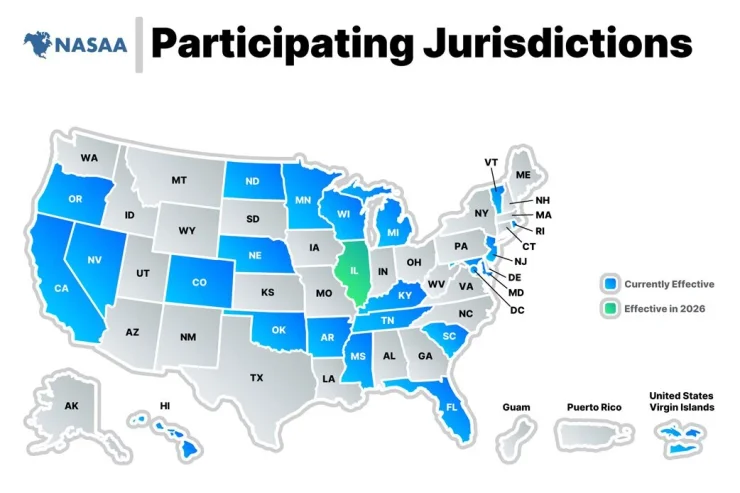
Every investment adviser representative (IAR) registered in a jurisdiction that adopts the NASAA model rule is subject to the CE requirement. The requirement applies to all registered IARs of both state-registered and federal covered investment advisers. IARs must meet the CE requirements of any state in which they are registered.

You can view your IAR CE transcript and manage your IAR CE requirement through FINRA’s Financial Professional Gateway(FinPro) account. FinPro provides individuals (current or former representatives) access to resources and tools to manage their securities registration information. Go to https://www.finra.org/registration-exams-ce/finpro to create an account. Please see the User Guide for help setting up your account.

If you are an IAR who must also complete FINRA’s Regulatory Element, you can count completion towards the Products and Practice component of your IAR CE requirements. Please note that you must speak with your broker-dealer to determine if they want to report it on your behalf or if you should self-report your course completion through FinPro and pay the applicable reporting fee of $18 ($3 per credit hour times six credits). To self-report the completion, log in to FinPro and scroll to the “Continuing Education” section, where you should see a header for IAR CE. Next to your “Incomplete” status, click the “Apply Regulatory Element Credit” link and follow the prompts to pay the reporting fee.

Except for FINRA’s Regulatory Element CE, Pass Perfect will report course completion to FINRA, NASAA’s vendor, for program tracking. There is no need to report the completion of CE directly to your state securities regulator.

IAR CE course completion is linked to your individual CRD number. You must provide course providers with your correct CRD number and the correct spelling of your name as reflected in CRD, or course completions may not be properly credited. If you do not know your individual CRD number, you can find it in your FinPro account or by looking up your profile in IARD.

Yes, there is a $3.00 roster fee per credit per person. This roster fee is included in your course purchase.

Home
  • Student Login
  • 0
0
Student Login